At RCA Carpentry LLC, we design and build custom stairs for Connecticut homes. A custom staircase is one of the most architecturally significant elements in any home — it defines the relationship between floors, anchors the visual character of the entry or living space and communicates the overall quality of the build more directly than almost any other single element. Building a custom staircase correctly requires precise calculation, skilled carpentry and a thorough understanding of Connecticut building code requirements for stair geometry, structural loading and railing systems.
With over 15 years of carpentry experience in Connecticut, our licensed and insured team has built custom staircases for residential renovations, new construction projects, additions and remodels throughout the state. We work from architectural plans, from client design direction and from site conditions where no plans exist. We calculate every stair to the correct rise and run proportions, build stringers to carry the structural load correctly and finish every component to the standard the space requires — whether that is a paint-grade interior stair or a hardwood showpiece in a finished living area.
RCA Carpentry LLC builds custom stairs of all configurations — straight runs, L-shaped turns, U-shaped returns, winder stairs and open-riser designs. We work in all standard stair materials: dimensional lumber for framed and painted stairs, hardwood treads for stain-grade applications, and specialty materials for custom design directions. Every custom stair project begins with a site assessment, a free written estimate and a clear scope of work. We build to Connecticut building code on every project and deliver a finished staircase that is structurally sound, geometrically correct and built to last.
Custom Stair Design and Layout
Custom stair design begins with the available space and the vertical rise to be covered. The relationship between rise height and tread depth — the unit rise and unit run — must fall within the proportions that Connecticut building code requires and that feel natural and safe to walk. Too steep a pitch creates a stair that is uncomfortable and potentially dangerous. Too shallow a pitch wastes floor space and produces a stair that also feels wrong underfoot. RCA Carpentry LLC calculates rise and run for every custom stair project to produce a geometry that meets code and feels correct in use.
Layout decisions — straight run versus turned configuration, open riser versus closed riser, center stringer versus closed stringer, landing dimensions and positions — are driven by the available floor plan, the architectural character of the space and the client's design intent. We assess the site conditions carefully before any layout is finalized, because the floor-to-floor height, the available run length, the location of bearing walls and the existing floor framing all affect what configurations are structurally and practically feasible. We present layout options with a clear explanation of the tradeoffs before any work is committed.
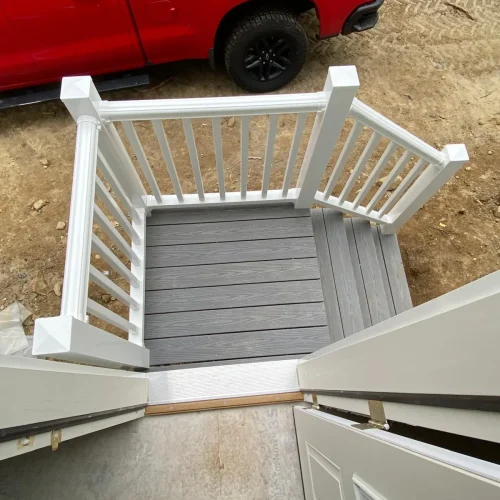
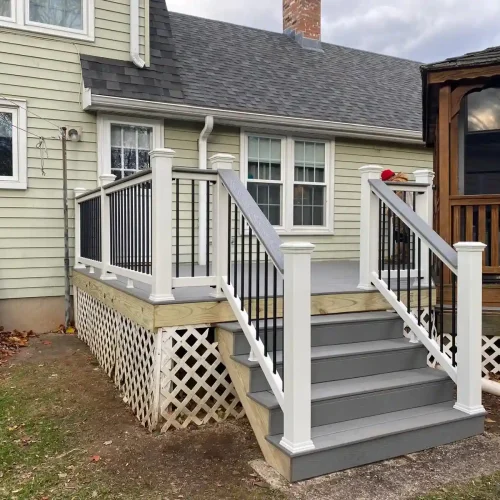
Railing and baluster design is part of every custom stair project. Connecticut building code specifies required handrail heights, baluster spacing limits and structural load requirements for railing systems. Within those requirements, there is significant design flexibility — newel post profiles, baluster styles, handrail profiles and cap rail details all contribute to the visual character of the finished stair. RCA Carpentry LLC builds railing systems that meet code, integrate with the stair design and are constructed to the structural standard that a safety-critical element requires.
Custom Stair Construction and Installation
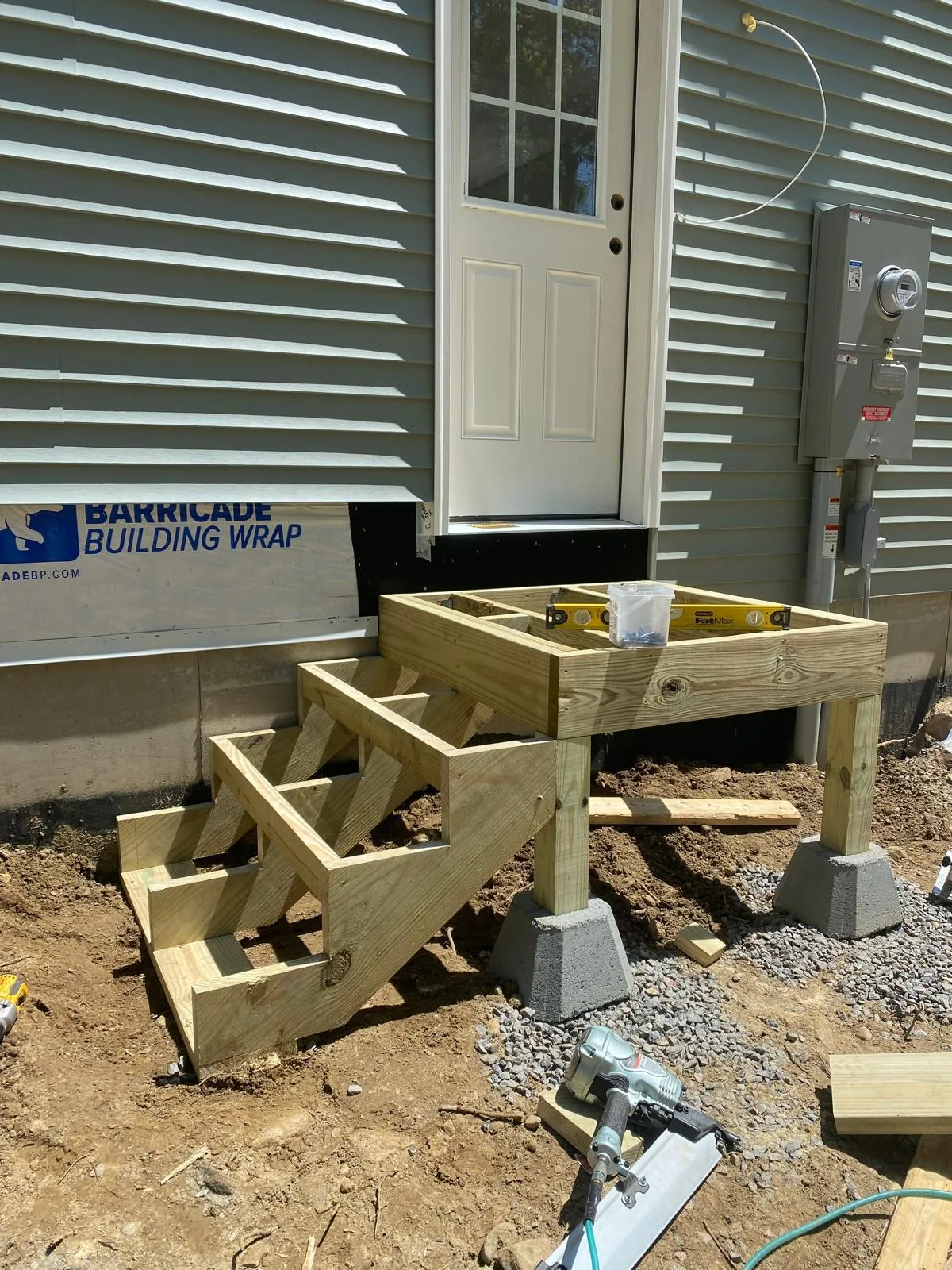
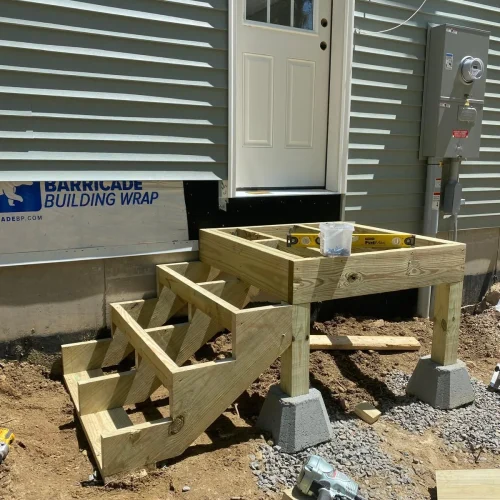
Custom stair construction begins with the stringers — the diagonal structural members that carry the load of the treads and anyone walking on them. Stringer layout requires precise calculation and careful cutting: each step notch must be cut to the exact same rise and run dimensions, at the correct angle, and the remaining stringer depth after notching must meet the minimum depth that Connecticut building code requires for structural adequacy. Stringers that are cut incorrectly — too deep at the notch, at inconsistent dimensions, or at the wrong pitch — produce a stair that is either structurally compromised or geometrically incorrect. RCA Carpentry LLC lays out and cuts stringers with the precision the work demands.
Tread and riser installation follows stringer setting and connection. For paint-grade stairs, treads and risers are typically dimensional lumber or MDF installed with glue and mechanical fasteners, with glue blocks at tread-to-riser connections to eliminate movement and noise from the first day of use. For stain-grade stairs with hardwood treads, material selection, acclimation and installation method are all critical — hardwood installed without proper acclimation or without adequate fastening will move seasonally and develop squeaks regardless of installation quality. We build custom stairs to stay tight and quiet through Connecticut's seasonal cycles.
Newel post installation is the final structural element of the stair system before railing and balusters are installed. Newel posts must be anchored to resist the lateral and overturning loads that people apply to them when using the railing — a newel post that relies only on through-bolts to a tread will move over time. RCA Carpentry LLC anchors newel posts to the structural framing of the stair system, not just to the tread surface, so the railing connection is solid for the life of the staircase.
Why Custom Stairs Require an Experienced Carpentry Contractor
Custom stair building is one of the most technically demanding applications in residential carpentry. The combination of precise geometric calculation, structural engineering requirements, material knowledge and finish carpentry skill required to build a custom staircase correctly is not common. A stair that looks right from a distance but was built with incorrect rise and run proportions will feel wrong to every person who uses it. A stair built with incorrectly sized stringers will develop structural problems. A railing system built without correct load capacity is a safety liability regardless of how it looks.
Connecticut building code requirements for stairs cover rise and run dimensions, minimum stringer depth, headroom clearance, handrail height, graspability and baluster spacing. Every one of these requirements exists because stairs that do not meet them create measurable safety risks. RCA Carpentry LLC builds every custom stair to full Connecticut code compliance — not because an inspector will necessarily check every dimension, but because code requirements reflect genuine safety standards that protect the people who use the staircase every day.
With over 15 years of carpentry experience in Connecticut, RCA Carpentry LLC has built custom staircases for homes of all types and all design directions. We are fully licensed and fully insured. Every custom stair project begins with a thorough site assessment and ends with a staircase that is geometrically correct, structurally sound, code-compliant and built to the finish standard the space requires. When we complete a custom stair, it performs correctly and looks right — from the day it is finished through decades of use.
Benefits of a Custom Staircase in Connecticut
A custom staircase built by a licensed Connecticut carpentry contractor adds architectural quality, functional value and lasting structural performance to your home. Here are the key benefits homeowners experience when working with RCA Carpentry LLC on custom stairs:
- Rise and run calculated to Connecticut code proportions — a stair that is safe, comfortable and correct to walk every day
- Stringers laid out and cut precisely — consistent geometry and correct structural depth throughout the full stair run
- Glue blocks at tread-to-riser connections from day one — no squeaks, no movement as the stair settles into use
- Newel posts anchored to structural framing — railing connections that stay solid for the life of the staircase
- Railing systems built to Connecticut code load requirements — baluster spacing, handrail height and graspability all correct
- Licensed and insured contractor on every custom stair project — your home and investment are fully protected
- Free written estimates with full scope and layout options before any work begins — no surprises
A custom staircase is a long-term architectural element in your home. RCA Carpentry LLC builds custom stairs in Connecticut that perform correctly from the day they are finished and continue performing through decades of daily use — because that is the standard a permanent structural element deserves.